

THE RULE OF INVESTMENT IN THE NEW WORLD: THINK LONG-TERM
-
- 24 December 2025


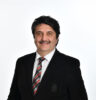
In today’s world, where financial fluctuations and digital transformations are accelerating, strategic planning is more critical than ever for individual investors and young people. Economist Islam Memiş discusses the risks of getting caught up in short-term excitement, the role of traditional instruments such as gold and silver, and the investment and housing priorities of young er generations. In this interview, we share Memiş’s comprehensive views on the importance of long-term thinking and learning on the ground.
WHAT IS THE IMPORTANCE OF A MEDIUM AND LONG-TERM PERSPECTIVE FOR INDIVIDUAL INVESTORS? WHAT RISKS DOES AN APPROACH THAT PRIORITIZES SHORT-TERM RETURNS ENTAIL?
The conditions individual investors find themselves in today are much more fragile and uncertain compared to previous periods. Many factors, such as geopolit ical tensions, political tensions, and trade wars, are converging around the world, reducing predictability. In such an environment, the strongest way for in dividual investors to protect themselves is to make long-term plans and focus on acquiring real assets. This is because approaches that prioritize short-term returns make people more prone to error and emo tional decision-making.
The fluctuations experienced over the past five years are forcing investors to ask themselves the question, “What do I want?” Investments are made in foreign exchange, the stock market, gold, or other instruments; however, these investments must be linked to a goal. When clear goals are set, such as owning a home, buying a car, starting a business, or beginning to ex port, investors can chart a course appropriate to that goal. If they are looking at a 5-10 year perspective, Türkiye’s long-term return data also supports this. Over the last 23 years, gold and silver have been the assets that have provided the highest returns in TL terms. For example, the 23-year return on a gram of gold is over 9000% and it has never relinquished its top spot. It is followed by the stock market, the euro, and the dollar.
Short-term volatility often magnifies risks. The influence of social media is one of the most critical dangers here. People envy others’ lives, dream of quick gains, let their desires override their judgment, and this situation disables a healthy deci sion-making mechanism. The perception of “get rich quick” created by social media makes investors complacent and increases risk.
Today in Türkiye, short-term trading has turned into a form of f inancial gambling addiction. In my work as an expert witness, I have seen an increase in the number of people who have lost their jobs, families, and assets, and even been driven to suicide as a result. Therefore, the best strategy for individual investors is to make long-term plans based on realistic goals rather than short-term dreams.
On the other hand, the need for housing is emerging as a priority in the medium term. As I have been saying for years to engaged couples or retirees, “a roof over one’s head” is the most fundamental element of security. This is because there is a serious housing crisis in the world. Due to rising costs in metropolitan areas, people are leaving the city, and the business world is struggling to find workers. Therefore, it is important for individual investors to first address their housing needs. In short, while a long-term perspective protects investors, short-term excitement, social media influence, and the desire for quick profits create serious financial and psychological risks.
HOW HAS THE ROLE OF TRADITIONAL INVESTMENT INSTRUMENTS IN INDIVIDUAL INVESTOR PORTFOLIOS CHANGED IN LIGHT OF ECONOMIC FLUCTUATIONS?
Over the past five years, we have seen a significant increase in demand, particularly for silver. The number of silver investors has grown markedly, both in banks and in physical form. This is a positive picture. However, in the stock market, a process that has undermined investor confidence has been experienced over the past two years. A “renewal of vision” is needed in the Turkish stock market. As investor confidence declines, there is a growing tendency to move away from the Turkish Lira and toward foreign markets. This poses a risk to the country’s markets.
Nevertheless, interest in gold has been very strong over the past f ive years. There is also movement in silver, but gold is still clearly ahead as a traditional investment vehicle. There has been an increase in the gold reserves of the Central Bank of the Republic of Türkiye (CBRT) from 450 tons to 556 tons, then to 650 tons. Interest in gold is also growing among foreign investors. In the f irst 10 months of 2025, approximately 50 tons more were added to the gold reserves.
This year, even though the dollar exchange rate did not rise, gold gained 100% in value, rising from 3,000 TL to 6,000 TL per gram. In other words, if the dollar/TL increase had been included, the return on gold would have been much higher. This further directed investor behavior towards gold.
Here’s how I would summarize the outlook for 2025:
1) Gold, 2) Silver, 3) Money funds and deposits, 4) Stock market and foreign exchange.
WHAT ARE YOUR RECOMMENDATIONS FOR INDIVIDUAL INVESTORS REGARDING FINANCIAL LITERACY?
I have been working in the field of financial literacy for many years. I have written books, given seminars, and regularly meet with universities, NGOs, and the business world. However, to be frank, the level of financial literacy in Türkiye is quite low. The vast majority of people do not like to read or research; they act on headlines and proceed with an investment mindset reduced to the question, “Should I buy or sell?”
Misinformation on social media is a very serious problem. Profiles that speculate, manipulate, and whose real identities are unknown are influencing investor behavior.
According to my calculations, the level of financial literacy in Türkiye does not exceed 3%. This means that only 3 out of 100 people are able to apply what they have learned. The rest are driven by the desire for quick profits and focus on a single instrument, which increases their losses. There are serious cases of victimization, especially in leveraged trading and forex.
To improve financial literacy, investors must at least do the following:
-Reading books regularly,
-Listening to different experts,
-Getting to know the company you invest in,
-Diversifying your portfolio,
-Making a long-term plan
There is a simple method even for those who want to avoid technical terms: Allocate one-fourth of your monthly savings to foreign currency, one-fourth to the stock market, one-fourth to commodities, and one-fourth to another instrument you consider safe. As long as it is regular and long-term, this investor will profit in any case.
IN THIS UNCERTAIN ENVIRONMENT, WHAT SHOULD YOUNG INVESTORS DO TO ESTABLISH A HEALTHY RISK RETURN BALANCE?
The world is undergoing a major transformation process towards 2030; geopolitical and economic balances are shifting, populations are relocating, and forced migra tion, wars, and climate crises are setting the agenda. Therefore, investors must set aside short-term gains and make long-term plans. Physical money and traditional banking practices are increasingly being digitized, with artificial intelligence and digital currencies shaping eco nomic control; the era of getting rich through buying and selling is coming to an end. It is becoming increasingly important for individuals to determine their housing, savings, and investment plans in advance and to have access to healthy food and arable farmland.
Young people, in particular, need to first set their life goals. Access to information is now very easy; thanks to artificial intelligence, it is possible to access the entire content of a four-year education with a single click. However, the accuracy of this information is not always guaranteed; real knowledge is gained in the field. It is essential for young people to learn by touching, experiencing, and working, and to gain experience in the field. Furthermore, with the transition to a digital currency system, we are the last generation to use paper money. Therefore, it is critical for young people to prepare for this transformation now and to prioritize their housing needs in their long-term planning. Today, one of the most important crises in the world is the housing crisis, and young people need to be conscious of this issue as they prepare for the future.
The next four years will be critical for Türkiye; instead of wasting energy on internal conflicts, it is necessary to unite around a common goal and reform the mindset. After 2030, economic control will largely shift to systems and artificial intelligence. Therefore, long-term planning, protecting existing resources, and acting on knowledge gained in the field are of vital importance.