


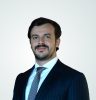
PRESIDENT OF DEIK NAIL OLPAK: “TÜRKİYE IS THE RELIABLE PARTNER EUROPE IS LOOKING FOR”
-
- 11 June 2026


President of DEİK Nail Olpak spoke to our magazine about how Türkiye can secure a stronger position in its foreign economic relations during this period of reshaping global trade and what strategic steps the business community must take in the face of shifting balances.
How do you assess the letter from the Turkish business community to the European Union, led by DEİK? What are the most critical agenda items in Türkiye-EU economic relations today?
As DEİK, we published our letter—addressed to the Chairman of the European Commission, the Chairman of the European Council and the Chairman of the European Parliament and signed by me as DEİK President, our European Coordinator Chairman Mehmet Ali Yalçındağ and the chairmans of the business councils of EU member states—in the Financial Times in January. The message conveyed in the letter aims to revitalize the integration process between Türkiye and the European Union and to position Türkiye more strongly within Europe’s strategic future. We also highlight the value that Türkiye’s full membership in the EU would add to Europe’s strategic autonomy and global security. We also sent a similar version of this letter, published in January, to the political leaders of the so-called EU-6— Germany, France, Italy, Spain, the Netherlands, Poland and Belgium, one of the EU’s founding member states.
There was a post-customs union economic integration between Türkiye and the EU. However, considering the paradigm shifts in the global economy and trade, particularly in recent years, restructuring our current economic integration has become a necessity. We are also closely monitoring the steps the EU is taking to support its own industry, research and innovation capacity and competitiveness, as well as its efforts to secure new partners. At this point, our message to the EU is very clear: The partner you seek is right here. If we elevate our current integration to a much higher level, not only will our country benefit, but Europe will also gain significantly from this. Our primary demand and the central focus of our communication strategy is the swift admission of our country into the EU. In addition, our agenda includes numerous items such as revisions to the customs union, the inclusion of our country in public procurement, visa issues, truck quotas and cooperation during the transition to the green and digital economy.
What messages do you expect to be conveyed to the business community during the DEİK General Assembly to be held in June with the participation of our President? How do you assess the importance of this meeting in terms of Türkiye’s economic diplomacy objectives?
DEİK’s 39th Ordinary Financial General Assembly and the 5th Masters Pioneers Award Ceremony will be held on June 6, 2026. Our General Assembly goes beyond being merely a general assembly; it also serves as a broad-based DEİK consultation meeting. In this context, the General Assembly will provide an opportunity to discuss a wide range of concepts and developments, including the impact of global economic and geopolitical developments on the economy and trade; rising protectionist trends; ongoing conflicts; restructuring of supply chains; energy security and supply; and current developments regarding trade corridors, as well as their effects on our country’s economy.
In this context, we can expect two key messages to emerge. One concerns our relations with Europe. The EU is currently engaged in a restructuring effort. If, as a reliable partner, Türkiye is included in this restructuring and we finalize our existing economic integration through full EU membership, this will be highly beneficial not only for us but also for Europe. Another key message will be that, in the face of increasing geopolitical tensions and conflicts in recent years, our country remains a safe hub for investment, production and logistics for all investors.
How do you assess the competitive strength of Turkish companies in the context of the EU’s Green Deal, CBAM and new trade policies? How is DEİK supporting the business community in this process?
For Turkish companies, this presents both significant risks and serious opportunities. Especially for the Turkish industrial sector, which is highly integrated into the European market, this transformation has now shifted from being primarily an environmental agenda to a direct competitive issue. When we look at Türkiye’s export structure to the EU, we see that carbon-intensive sectors such as iron and steel, aluminum, cement, automotive, chemicals, textiles and home appliances stand out. Therefore, with the full implementation of CBAM, companies unable to manage carbon costs may lose their price advantage. However, there is also a significant advantage for Turkish producers: geographical proximity to Europe, a strong industrial infrastructure, flexible production capacity and advanced supply chain integration. Today, European companies are not merely seeking low-cost producers; they are also evaluating criteria such as a low carbon footprint, sustainable supply chains, traceable production, the use of renewable energy and ESG compliance. To the extent that Turkish companies can successfully navigate this transformation on time, they can secure a stronger position within European supply chains. We are closely monitoring our companies’ efforts in this regard and can report a positive trajectory.
As DEİK, we are also striving to provide support in this area from three different angles. First, we continue our support activities— such as information sharing, raising awareness, training and consulting—to help companies prepare for this process. By leveraging grant programs provided by the Istanbul Development Agency within this framework, we are diversifying our support activities through collaboration with universities. Another way we provide support is by engaging with policymakers in the public sector to contribute to the policy-making process. We also assist in shaping the necessary legislation and implementation based on feedback from our member companies. Finally, leveraging our international network—DEİK’s most significant advantage that distinguishes us from other business organizations—we effectively utilize our lobbying activities in our communications with EU countries to advocate for their interests.
What picture did this year’s Antalya Diplomacy Forum paint in terms of business diplomacy? How do you assess the forum’s contributions to the Turkish economy?
The Antalya Diplomacy Forum goes beyond being merely a platform for traditional diplomatic engagements, presenting a significant picture that demonstrates how business diplomacy is assuming an increasingly central role. Especially in a period marked by accelerating global geopolitical shifts, trade wars, energy security debates and supply chain transformations, the forum serves as a crucial platform for highlighting how the ties between politics, diplomacy and the economy and trade have become far more intertwined. A key element of the forum is the active involvement not only of government representatives but also of investors, business organizations, financial circles and private sector representatives in the processes. This demonstrates that Türkiye’s “multi-dimensional diplomacy” approach is strengthening its economic pillar.
We organized the panel titled “Europe’s Competitive Edge in an Era of Geopolitical Uncertainties,” held in collaboration with the Antalya Diplomacy Forum (ADF) and DEİK, with the participation of Xavier Bettel, Deputy Prime Minister of the Grand Duchy of Luxembourg and Minister of Foreign Affairs, Foreign Trade, Development Cooperation and Humanitarian Affairs; Mihai Popşoi, Deputy Prime Minister and Minister of Foreign Affairs of Moldova; Thorgerdur Katrin Gunnarsdottir, Minister of Foreign Affairs of Iceland; Ireland’s Minister of State for European Affairs and Defense Thomas Byrne and Türkiye’s Deputy Minister of Trade Mustafa Tuzcu.
It would be appropriate to assess the forum’s contribution to the Turkish economy on several levels: First, serving as a key showcase for investment diplomacy, the Forum provides an opportunity to directly present Türkiye’s investment environment to high-level representatives from numerous countries and global corporate executives. Second, it creates a vital networking platform for the Turkish private sector to establish direct contact with global decision-makers. This particularly paves the way for new partnerships for DEİK, sectoral associations and Turkish companies. Thirdly, it functions as a “soft power” tool that strengthens Türkiye’s geo-economic position. Increased diplomatic visibility can positively impact perceptions of trade, tourism, finance and investment. Today, in the global economy, capital looks not only at financial indicators but also at political stability, diplomatic capacity and regional influence. In this regard, the Antalya Diplomacy Forum has become one of the key platforms that makes Türkiye’s strategic weight in the international system visible.
In your opinion, what have been the most significant achievements of the Turkish business community on the international stage as a result of DEİK’s efforts in recent years?
DEİK’s efforts in recent years have significantly enhanced the Turkish business community’s visibility and institutional access capabilities on the global stage. Especially during a period when the global economy has become more fragmented and geopolitical risks have grown more decisive, the business diplomacy initiatives led by DEİK have provided strategic advantages to the Turkish private sector. In my view, one of the most significant achievements is the transformation of the Turkish business community from a structure focused solely on exports into an actor that makes more investments, forms partnerships and integrates into global networks. Today, Turkish companies are in a more visible and effective position across a very broad geography, from Africa to the Gulf region and from Central Asia to Europe. Turkish companies’ capacity to access high-level decision-makers has significantly increased. Thanks to the business diplomacy model implemented by DEİK through its Business Councils, companies can establish direct contact with ministers, investment agencies, sovereign wealth funds and major investors in many countries. Türkiye’s position as a “supply chain hub” has been strengthened. DEİK’s international contacts contributed to Türkiye’s emergence as a leading choice for European-based companies seeking reliable production partners in the immediate region during the post-pandemic period. The global perception of the Turkish private sector has begun to shift. Türkiye is now increasingly viewed not merely as a production country offering cost advantages, but as an economy that develops technology, makes investments, manages crises and builds regional connections. Additionally, DEİK’s shift in recent times—moving beyond the traditional focus on merely increasing trade to prioritize new-generation topics such as the green economy, digital economy, artificial intelligence, energy transition, sustainable finance, startups and the technology ecosystem—can be seen as a significant sign of transformation.